


Roman road Šmartno–Poženik
Between Šmartno and Poženik the route of a Roman road has been discovered, with a cemetery alongside it.
Archaeological sites
The area of today’s municipality of Cerklje na Gorenjskem holds many traces of its former inhabitants. Archaeological finds show that the area was settled from the Neolithic, through the Bronze and Iron Ages and the Roman period, up to the early Middle Ages. Sites have been found both in the valley along the Pšata and in the higher areas of Štefanja Gora and Krvavec.
The hillfort (gradišče) near Stiška vas is considered one of the oldest known settlements in the Cerklje area. It dates from the Neolithic, the 5th millennium BC, when permanent settlement began to spread with the development of farming and livestock breeding.
The settlement stood on an exposed spur above the Reka valley, in a naturally well-protected position. The remains of the hillfort are important evidence of the earliest settlement of the area.
Štefanja Gora is an important archaeological area with finds from various periods. The settlement around today’s Church of St Stephen goes back to the Neolithic, and the area was settled again in the late Roman period. An Early Iron Age hillfort has also been recorded on Štefanja Gora.
With its naturally protected position, the hill offered a good place to settle throughout various historical periods.
Šmartno and its surroundings are among the archaeologically richest areas in the municipality. A Late Bronze Age cemetery was found on Milharjev hrib, while the wider area of Straža, Cerkovnek and Brinovec holds traces of settlement from the Iron Age, the Roman period and the early Middle Ages. In Roman times a larger settlement grew up on the site of today’s Šmartno. Archaeological finds, including the remains of buildings, bear witness to long and important settlement of the area.
Between Šmartno and Poženik the route of a Roman road has been discovered, with a cemetery alongside it.
In Cerklje na Gorenjskem stands the birthplace of Fran Barle, one of the most important organisers of the Slovenian fire service.
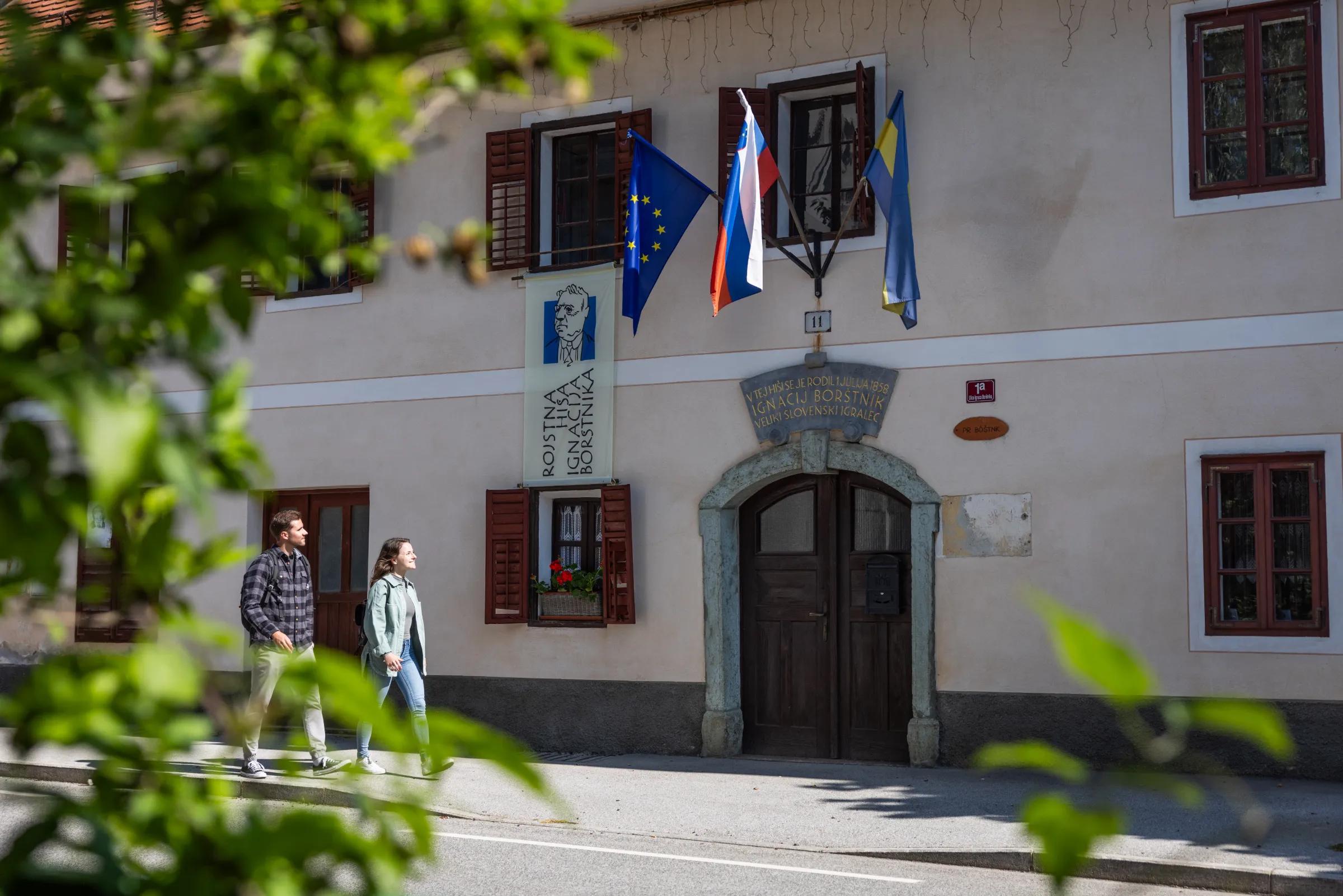
In Cerklje na Gorenjskem stands the birthplace of Ignacij Borštnik – actor, director and teacher, and one of the founders of Slovenian professional theatre.