

Reviving ancient customs: the Easter blessing of food in Cerklje
Easter, the greatest Christian festival, commemorates the suffering, death and resurrection of Christ, and it is also symbolised by a richly laden table.
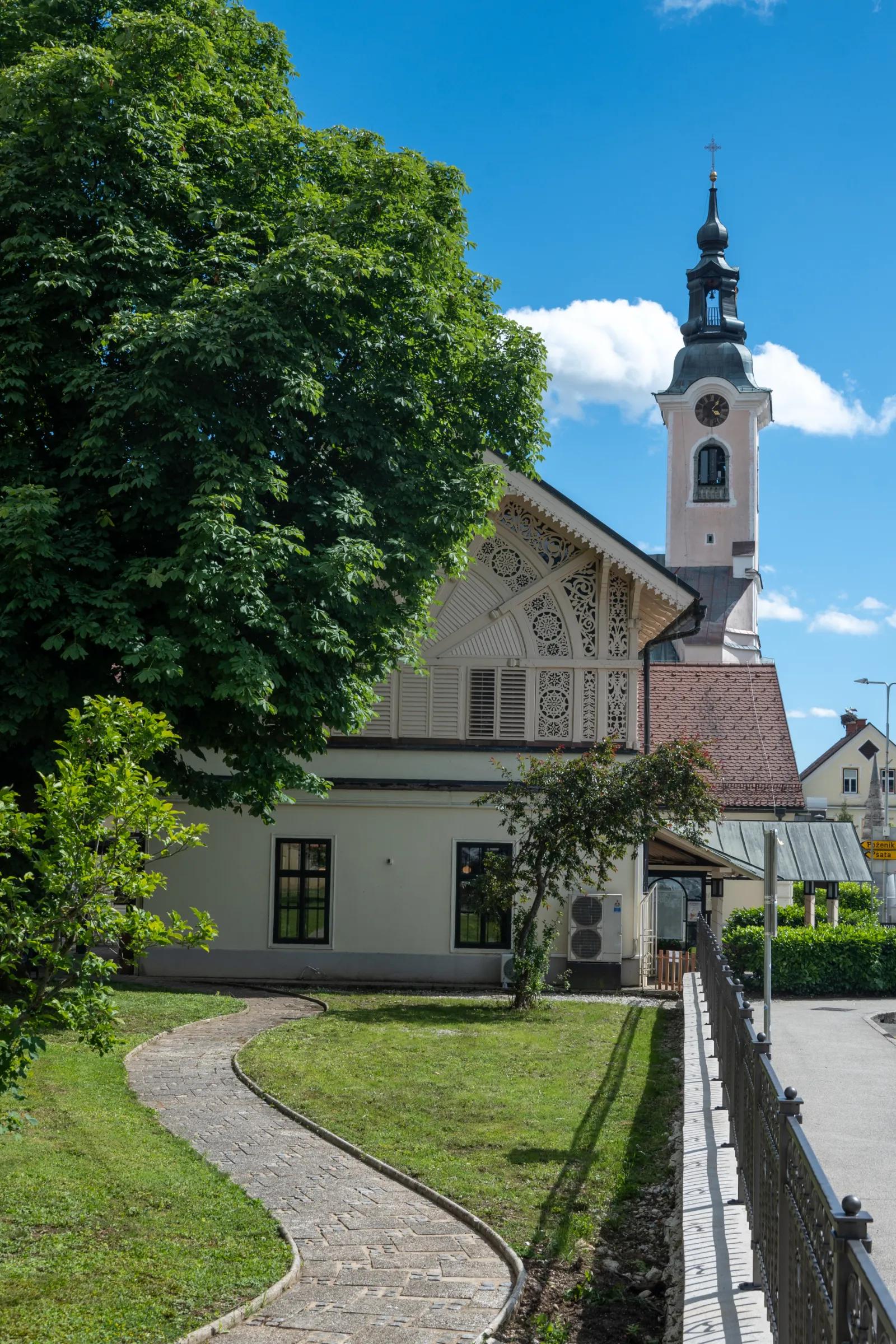
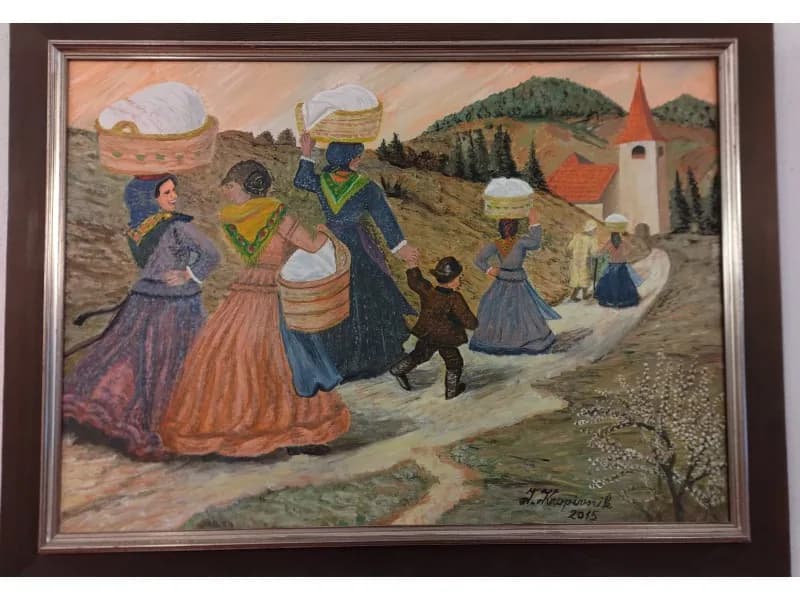
Many folk customs have also been preserved. Girls and women with baskets over their arms or with wooden baskets (jerbasi) on their heads, in fluttering silk skirts, and in the distance the bell tower of the little village church. The baskets are full and covered with an Easter cloth. And what lies hidden beneath the embroidery? First of all, five red Easter eggs, also called pisanice, remenke or praskanke, which represent the five drops of blood or the five wounds of Christ. The ham stands for the body of Christ, the horseradish for the nails with which he was nailed to the cross, and the potica (traditional nut roll) for the crown of thorns. The Easter egg is also a symbol of fertility and new life. Egg decorating, especially in Slovenia, has developed into a true folk art. Here, the most famous are the pisanice of Bela Krajina, although more and more new techniques are appearing. Potica is a Slovenian speciality; the most typical is, of course, walnut potica, and there are surely enough recipes to fill a whole book. Every Slovenian region adds something of its own, something special, to the blessing (žegen), so there is no shortage of excellent breads, such as our local prata.
The blessing, or žegen, of the foods typical of Easter is a very old custom and tradition in Slovenia, and probably elsewhere too, which has survived to the present day in an almost unchanged form. Certain changes did, however, take place soon after the Second World War. These were influenced by the socio-political circumstances, as well as by the shrinking of the once large farming families. Instead of a whole Easter potica – a kolač more than half a metre in diameter that neatly filled the jerbas – a whole smoked shoulder from a pig weighing two hundred kilograms or more, horseradish, eggs or Easter eggs and Easter bread, people began to bring only smaller pieces of these foods to be blessed. Smaller, handy baskets that can be carried into church in one hand became the norm.
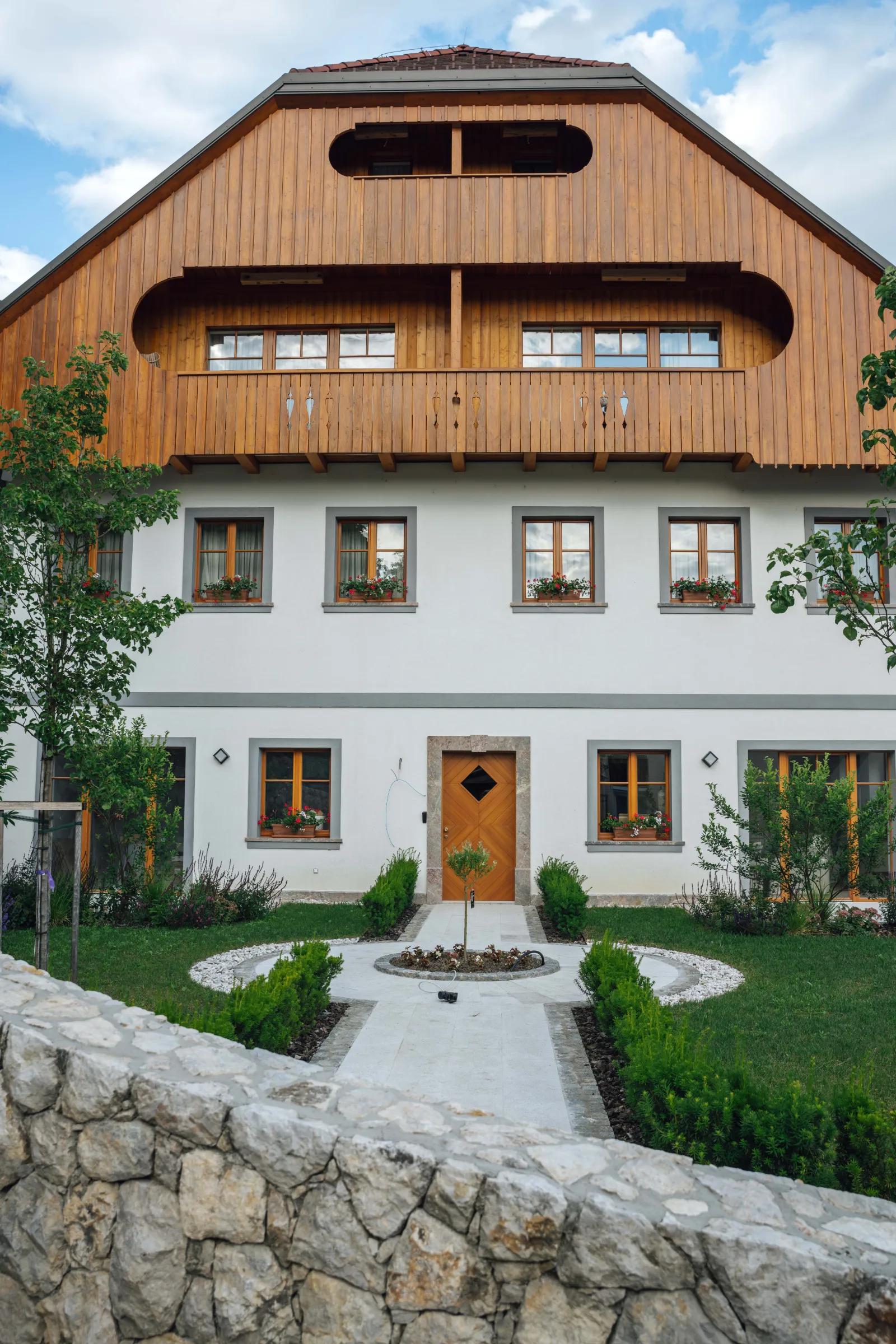
This year, however, the Ignacij Borštnik Cultural Society decided to revive the custom in its old, original form, when women and girls, dressed in folk costume or their Sunday best, carried the Easter food to the blessing in jerbasi on their heads. The Borštnik House still has the original utensils for baking potica in a bread oven, including a jerbas, a head ring (svitek) and an embroidered cloth with an Easter motif. All the ingredients for the Easter dishes will be baked and prepared at the Borštnik House as early as Friday.
On Saturday at 16.30, you are warmly invited to join them in as large numbers as possible when, together with members of the folk dance group of the society Folklora Cerklje, they will carry the delicacies to be blessed at the parish Church of the Assumption of Mary in Cerklje.